


Ceramic working, especially sculpting, allows me to lose myself. I can express feelings that I can't convey in other ways and put words to things that I otherwise could not.
All of my works have a story behind them; that's also an important part of the ceramic process for me. I like to build the story continuously along the way, and photographing them in the end brings the pieces and stories finally alive.

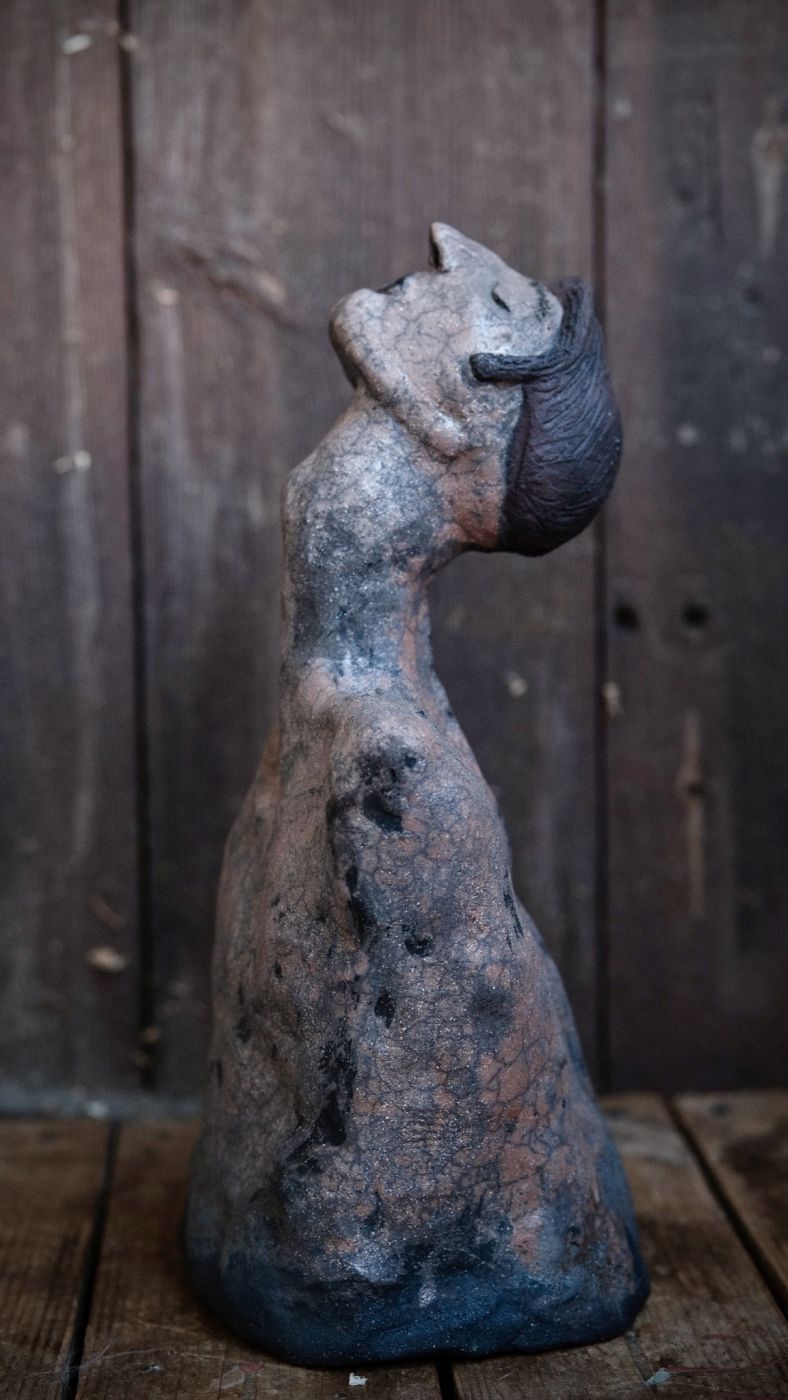
Two separate sculptures. One is called Last Breath of Autumn, the other Summertime Sadness. Two souls from different seasons .
They are a tribute to the punk years that shaped me. The noise, the rawness, the rebellion — but also the deep sadness that often hid behind the volume. Punk wasn’t just music to me, it was a lifeline. It still hums in my bones.
These brothers are sculpted from that past — clay shaped by chords, memory, and all the feelings that never found words.



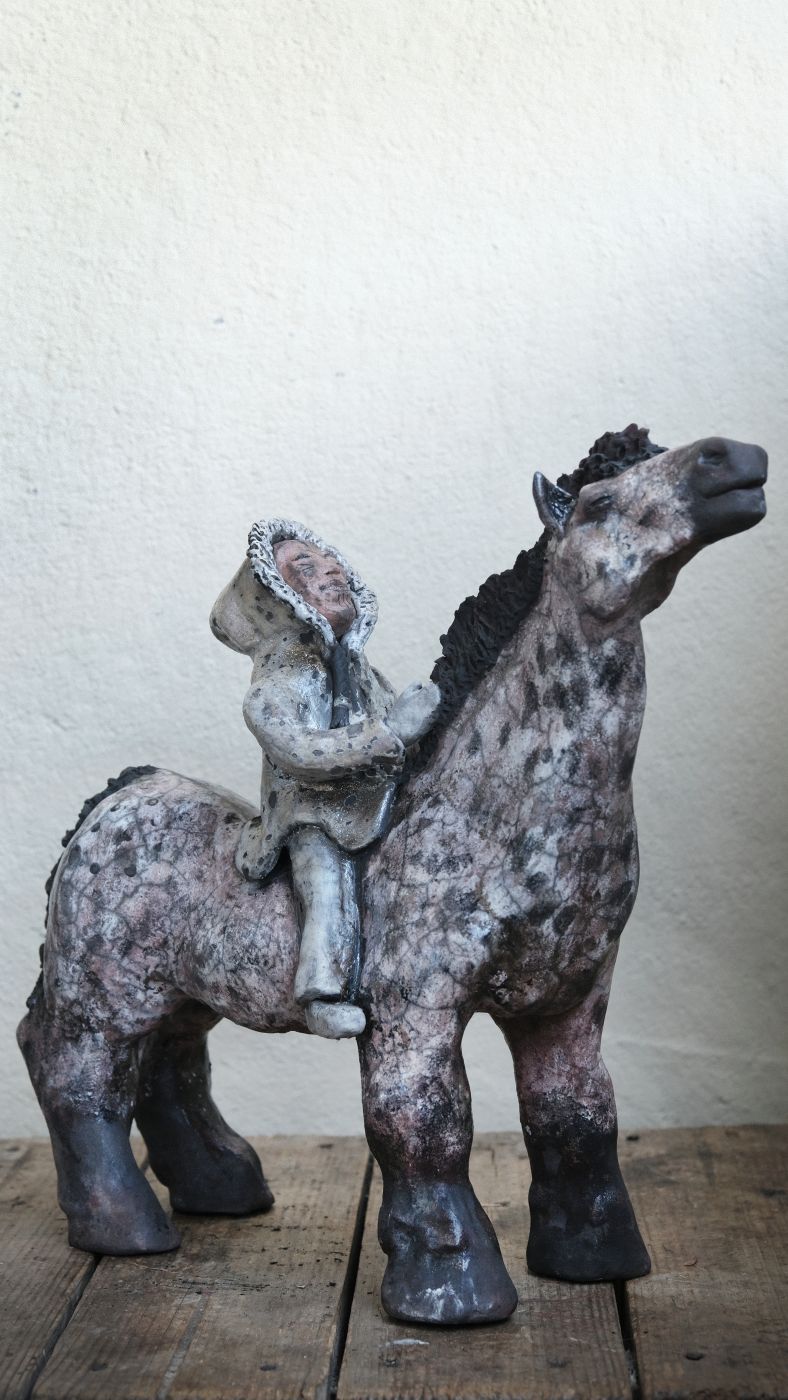
The name comes from two places — the price equals the cost of my own iron infusion, and the piece carries its own dose of iron through oxides in the glaze. I used them only on the horse’s body, not the rider, giving the animal a sense of weight and endurance.
At first, I didn’t like the result and swore I’d never use iron oxides again. But after re-firing, the surface came alive in a way I didn’t expect. The iron had fully infused into the clay and glaze, transforming the piece — a reminder that patience, mistakes, and process can all blend together to create something unexpected and alive.
* you can see the first version of the work on the below, second image.


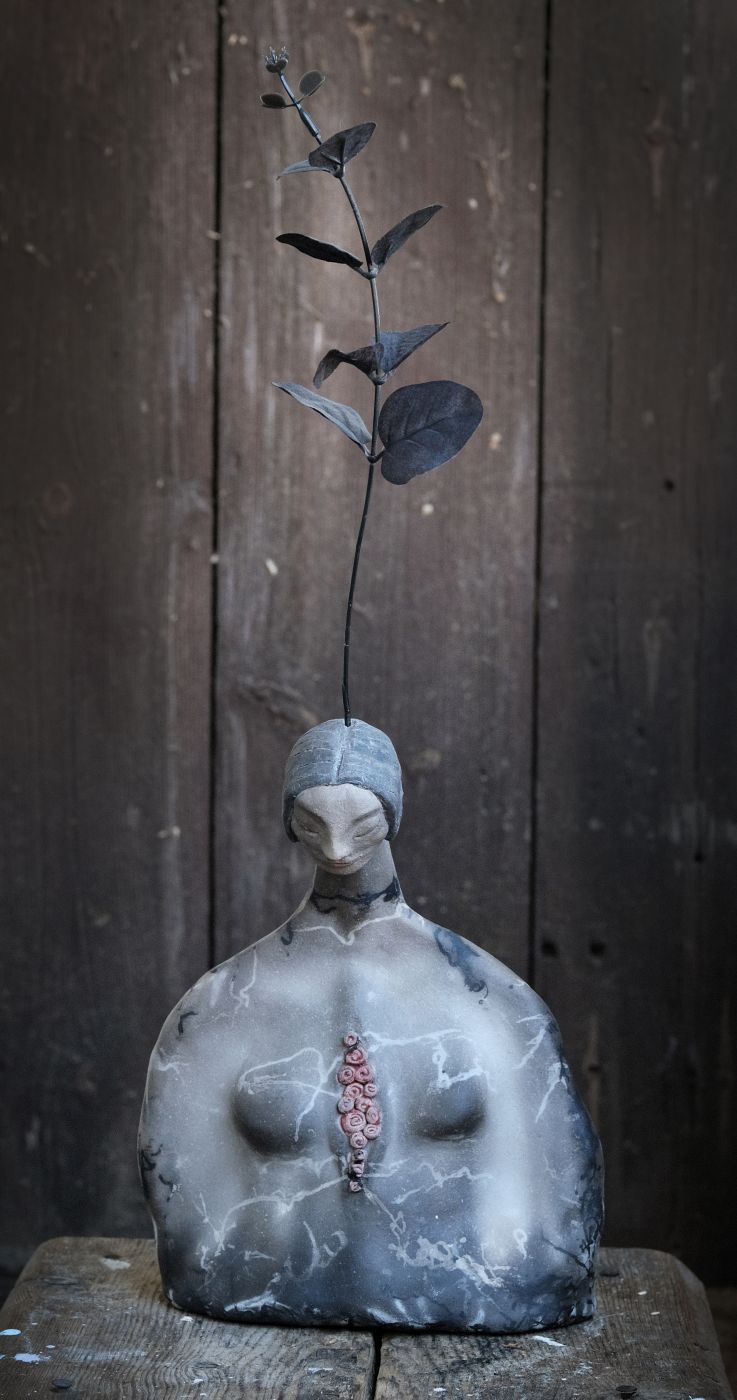
I have these works that only receive their names once they find their new home. In a way, I feel they don’t quite belong with me — as if they are waiting for the right place and the right person.
I often tell people that the name will come in time, and it usually makes for the most amazing stories.
When this work arrived at her new home, she was given the name Sylvi. I was asked if the name meant anything to me.
I answered, “Yes — it was my grandmother’s name.”

This work was created in the spring of 2024, when I had already started the grieving process regarding the loss of my horse, even before I had to let him go. For some reason, I wanted to create ravens, and somehow it felt as though my horse would be reborn as a raven here after death. The woman clearly shows the forms I like, perhaps something of an ancient human heritage, and one might even think there is a heritage from Palestine in her. But even though the woman doesn’t outwardly represent me, she is an image of me. Two crows represent my horse and my pony on my shoulders.
This work also represents change. Change what is the only constant in life, and it shows how we can reshape ourselves in the face of change. This work is definitely the most important of all my works, and in a way, it is also my bringer of good fortune. (Via Old French from Latin Fortuna, the name of a goddess personifying luck or chance.)


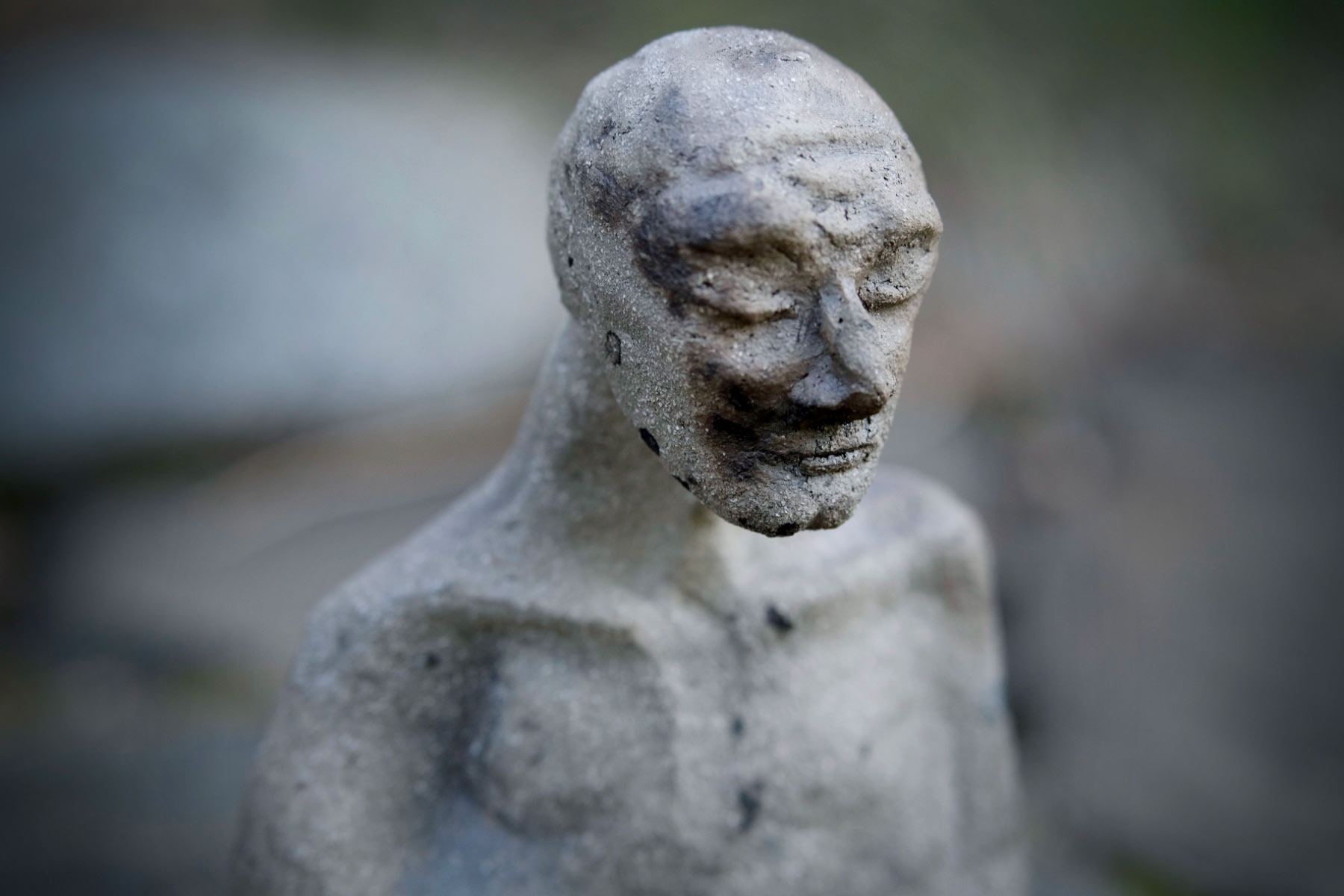
Polish Man was my first sculpture and the first raku firing work. It was somehow an ode to all men and Slavic people. But also like in my photography I love people with something special in their face. And he is telling a story of simple life and all the things he needed to carry on his back, because he is a man.
There is something so beatiful in older Slavic men and women, they have lived through hard life but in my mind they were always happy in this simplicity.
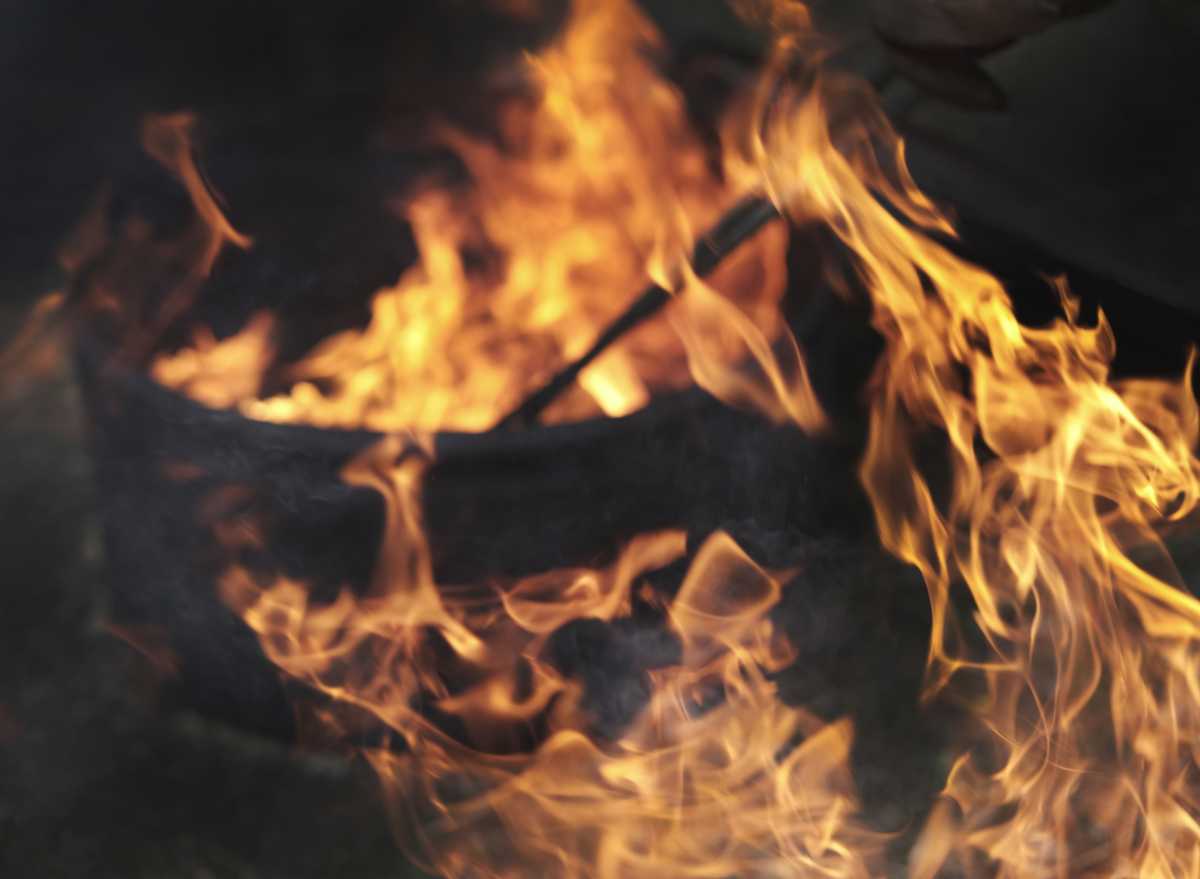
In raku firing I wanted also to do it simple, without anything shiny on his body.



REALITY - CHECK


Itkijänainen means lamenting women in Finnish. Lamenting women sang crying hymns at funerals and weddings in the 19th century in Karelia, Finland. With this work I embraced my own Karelian heritage.
The lamenting woman is faceless to hide the shame of crying, but the strong masculine back carries her through. Her tears create the gift of purification and transformation of pain.
Baltic Raku firing was a vital part of the process because Slavic countries share the tradition of lamenting women.


